当前位置:首页>排行榜>WIPO中国:福州——2026年世界百强创新集群第96位

WIPO中国:福州——2026年世界百强创新集群第96位

  • 更新时间 2026-11-05 19:15:06
WIPO中国:福州——2026年世界百强创新集群第96位

WIPO China: Fuzhou – No. 96 in the 2026 World's Top 100 Innovation Clusters

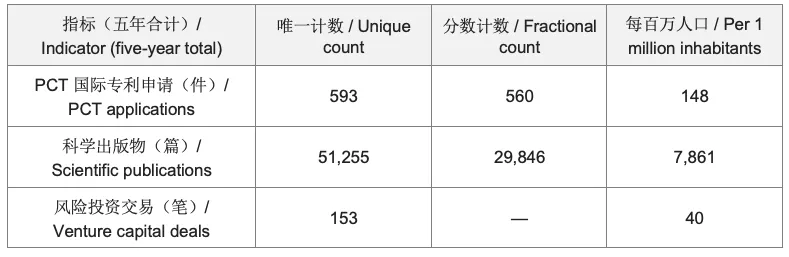
世界知识产权组织(WIPO)发布的《2026年全球创新指数》显示,福州在世界百强创新集群排行榜中位列第96位。过去五年间,按分数计数,该集群贡献了560件PCT国际专利申请和29,846篇科学论文,并完成了153笔风险投资交易。

According to the Global Innovation Index 2026 published by the World Intellectual Property Organization (WIPO), Fuzhou ranks 96th among the world's top 100 innovation clusters. Over the past five years, on a fractional-count basis, the cluster accounted for 560 international patent applications filed under the Patent Cooperation Treaty (PCT) and 29,846 scientific articles, and recorded 153 venture capital deals.

数据显示,该集群PCT申请占比最高的技术领域为计算机技术(18%),前三大PCT申请人中有一所高校,约71%的科学论文有集群外机构参与。

The data show that computer technology accounts for the largest share of the cluster's PCT applications (18%), its top three PCT applicants include a university, and about 71% of its scientific articles involve organizations outside the cluster.

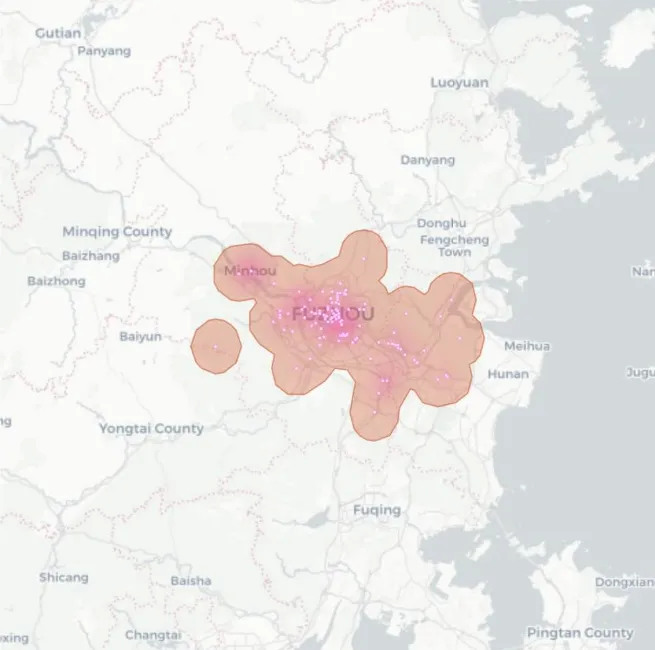
注:图中各点表示发明人、作者或风险投资交易的所在位置。地图使用Leaflet制作。地图数据 © OpenStreetMap贡献者,© CARTO

Note: Points represent the location of an inventor, author, or VC deal. Map created with Leaflet. Map data © OpenStreetMap contributors, © CARTO

来源:WIPO统计数据库,2026年6月|Source: WIPO Statistics Database, June 2026

一、排名结果与规模概览1. Ranking and scale

福州集群估计人口约380万(3,796,807人),在进入百强的25个中国集群中排名第19位。在2026年世界百强创新集群排行榜中,它凭借PCT申请、科学出版物和风险投资交易三项指标的综合表现位列第96位。

The Fuzhou cluster has an estimated population of about 3.80 million (3,796,807) and ranks nineteenth among the 25 Chinese clusters in the top 100. In the 2026 ranking of the world's top 100 innovation clusters, it ranks 96th on the strength of its combined performance across three indicators: PCT applications, scientific publications and venture capital deals.

唯一计数计入每件有本地发明人或作者参与的专利或科学论文;分数计数按本地贡献者份额分摊,避免跨集群重复计算。

Unique counts include every patent or scientific article involving a local inventor or author. Fractional counts apportion each patent or scientific article according to the share of local contributors, which avoids double-counting across clusters.

二、产业驱动的专利版图

2. An industry-driven patent landscape

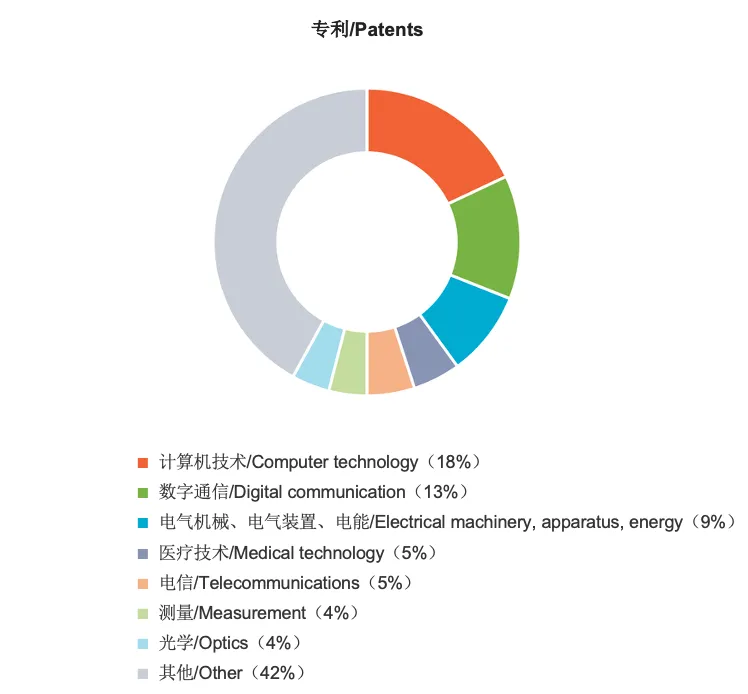
从技术领域看,该集群的PCT申请分布较分散。计算机技术占PCT申请的18%,数字通信占13%。电气机械、电气装置、电能占9%,医疗技术和电信各占5%,测量和光学各占4%。

By technology field, the cluster's PCT applications are relatively dispersed. Computer technology accounts for 18% of PCT applications and digital communication for 13%. Electrical machinery, apparatus, energy accounts for 9%, medical technology and telecommunications for 5% each, and measurement and optics for 4% each.

来源|Source:WIPO

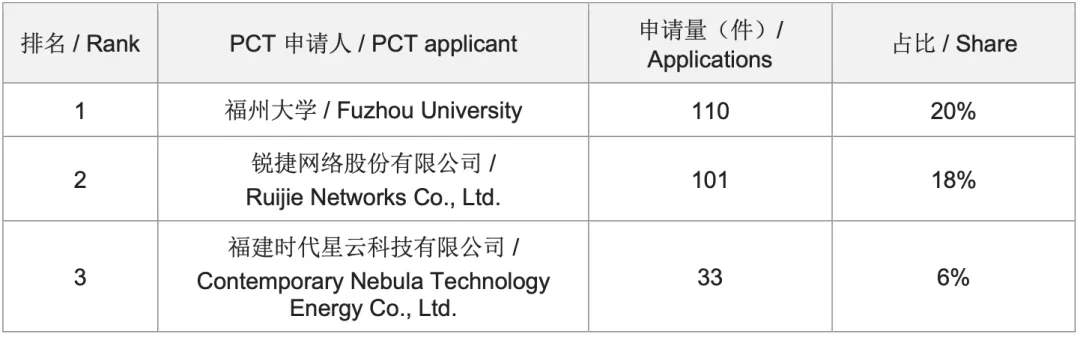
从申请人看,福州大学以110件位居首位,占集群PCT申请的20%;锐捷网络股份有限公司(101件)和福建时代星云科技有限公司(33件)分列第二、三位,分别占18%和6%。

By applicant, Fuzhou University ranks first with 110 applications, or 20% of the cluster's PCT applications. Ruijie Networks Co., Ltd. (101) and Contemporary Nebula Technology Energy Co., Ltd. (33) rank second and third with 18% and 6% respectively.

三、高校支撑的科研基础

3. A university-based research foundation

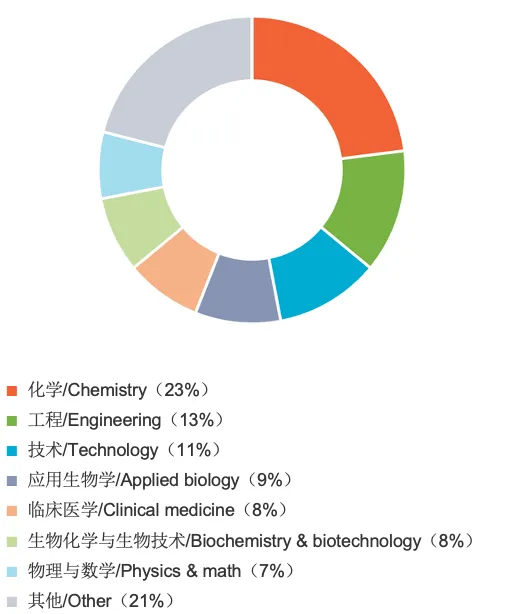
与PCT申请相比,该集群的科学产出较集中。化学(23%)位居首位,工程(13%)和技术(11%)紧随其后;应用生物学占9%,临床医学和生物化学与生物技术各占8%,物理与数学占7%。

Compared with PCT applications, the cluster's scientific output is more concentrated. Chemistry (23%) ranks first, followed by engineering (13%) and technology (11%); applied biology accounts for 9%, clinical medicine and biochemistry and biotechnology for 8% each, and physics and mathematics for 7%.

来源|Source:WIPO

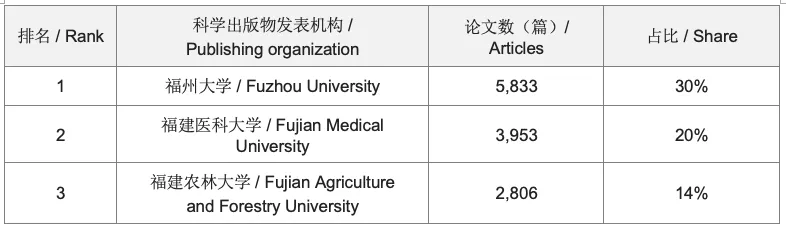
福州大学以5,833篇位居首位,占比30%;福建医科大学(3,953篇,20%)和福建农林大学(2,806篇,14%)紧随其后。

Fuzhou University ranks first with 5,833 articles (30%), followed by Fujian Medical University (3,953, 20%) and Fujian Agriculture and Forestry University (2,806, 14%).

四、两种协作模式

4. Two patterns of collaboration

PCT申请大部分在集群内部完成。按唯一计数,五年间该集群有446件PCT申请由多名发明人共同完成,其中57件有集群外发明人参与,约占全部申请的10%。主要合作地为深圳–香港–广州、上海–苏州和北京。

Most PCT applications take place within the cluster. On a unique-count basis, over the five years, 446 of the cluster's PCT applications had multiple inventors, and 57 of these involved inventors outside the cluster, about 10% of all applications. The main collaborating locations are Shenzhen–Hong Kong–Guangzhou, Shanghai–Suzhou and Beijing.

科研活动则深度融入外部网络。按唯一计数,在50,889篇多作者科学出版物中,有36,343篇与集群外机构合作完成,约占全部科学出版物的71%。主要合作地为北京、深圳–香港–广州和上海–苏州。

Research, by contrast, is deeply embedded in external networks. On a unique-count basis, of 50,889 multi-author scientific publications, 36,343 were produced with organizations outside the cluster, about 71% of all scientific publications. The main collaborating locations are Beijing, Shenzhen–Hong Kong–Guangzhou and Shanghai–Suzhou.

五、规模与强度

5. Size and intensity

按总量计,福州位列全球第96位;按创新强度(即相对人口规模的创新产出)计,它位列第81位。

By total output, Fuzhou ranks 96th in the world; by innovation intensity, meaning innovation output relative to population, it ranks 81st.

换算到人口,该集群每百万居民对应148件PCT申请、7,861篇科学出版物和40笔风险投资交易。其强度排名高于总量排名。

Per million inhabitants, the cluster records 148 PCT applications, 7,861 scientific publications and 40 venture capital deals. Its ranking by intensity is higher than its ranking by size.
点击阅读原文查看关于2026年世界百强创新集群更多信息。

随机文章